Featured

Pakistan Leads Regional Push to Reopen Hormuz Amid Iran Conflict

Foreign Ministers Badr Abdelatty of Egypt, Prince Faisal bin Farhan Al Saud of Saudi Arabia, Ishaq Dar of Pakistan and Hakan Fidan of Turkey meet to discuss regional de-escalation. Pakistan has emerged as a central diplomatic hub as it hosts foreign ministers from Turkey, Egypt, and Saudi Arabia for high‑stakes talks aimed at easing the Iran conflict and reopening the vital Strait of Hormuz. Regional Diplomacy Intensifies in Islamabad Pakistan convened the meeting in Islamabad as part of its effort to broker an end to the Iran war and stabilize global energy routes. The discussions focused heavily on proposals to reopen the Strait of Hormuz—one of the world’s most critical maritime corridors for oil and LNG shipments.  Key Points Foreign ministers from Turkey, Egypt, and Saudi Arabia arrived in Islamabad for the talks. Proposals were floated to Washington to restore shipping through Hormuz, including ideas modeled on Suez Canal–style fee structures.  A potential...

article

Israeli Forces Seize Crucial Rafah Border Crossing in Gaza


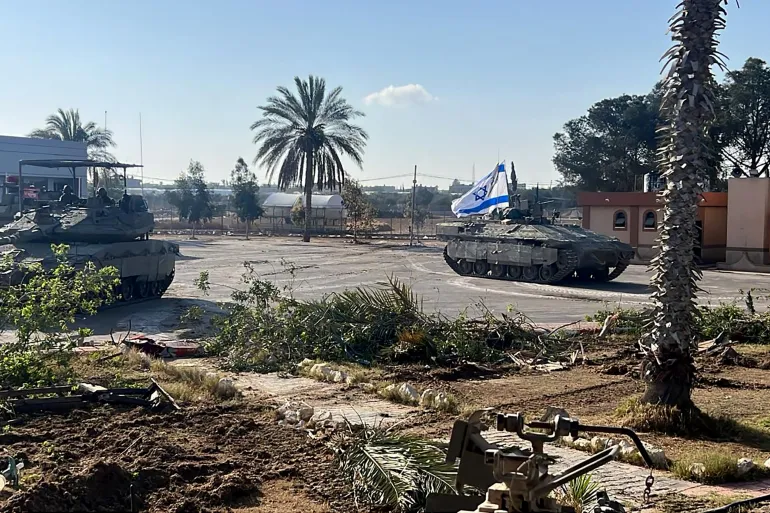
Israeli ground forces have seized control of the Gaza side of the Rafah border crossing with Egypt, effectively cutting off a vital route for humanitarian aid and potential sanctuary for civilians. The crossing has been a crucial entry point for supplies into the besieged enclave.

The Israeli 401st Brigade entered the Rafah crossing on Tuesday morning, a day after the Palestinian group governing Gaza said it accepted an Egyptian-Qatari mediated ceasefire proposal. However, Israel insisted that the deal did not meet its core demands. The seizure of the Rafah crossing comes as prospects for a ceasefire deal with Hamas hang in the balance.

The Rafah crossing is crucial for both aid and those able to flee into Egypt. Israeli leaders had long anticipated a military operation into the southern city, where some 1.4 million Palestinians, including more than 600,000 children, are sheltering. Despite warnings from the United Nations, United States, the European Union, and international humanitarian organizations that an attack would be catastrophic, Israel moved forward with its offensive.

Footage released by the Israeli military showed a tank entering the Palestinian side of the Rafah crossing. Details of the video matched known features of the crossing, and Israeli flags were seen flying from tanks that seized the area. The military said its special forces were scanning the area and had been operating since Monday night in eastern Rafah. Evacuations were carried out, with Palestinians instructed to move towards al-Mawasi on the Mediterranean Sea coast, where a humanitarian zone with field hospitals, tents, and medical supplies had been set up. However, the Israeli military intensified its bombardment of the city, resulting in casualties.

As the situation unfolds, the seizure of the Rafah crossing puts ceasefire talks on a knife’s edge. The international community closely watches developments in the region, hoping for a resolution that will spare civilian lives and alleviate the humanitarian crisis in Gaza. However, with Israel’s insistence on achieving its aims and Hamas’s resistance, the path to peace remains uncertain.


Comments