Featured

How inflation actually affects you

Inflation isn't just a number on the news. Here's what rising prices actually do to your wallet, savings, and everyday life in Canada. Canadian Money Brief   ·  Updated April 2026  ·  5 min read You've probably noticed that your groceries cost more than they did a few years ago. So does rent, a tank of gas, and a restaurant meal. But when the Bank of Canada announces that "inflation is at 2.8%," what does that actually mean for the money in your pocket? Let's cut through the economics jargon and get to what matters: the real, tangible ways inflation reshapes your financial life — whether you notice it or not. What inflation actually is Inflation is the rate at which prices across the economy rise over time. Canada's central bank tracks this using the Consumer Price Index (CPI), a basket of goods and services — think groceries, gas, rent, clothing, and internet plans — that a typical household buys. When that basket costs more than it did a year ago, we hav...

article

Freeland's Exit and Economic Woes: Canada Faces $61.9 Billion Deficit

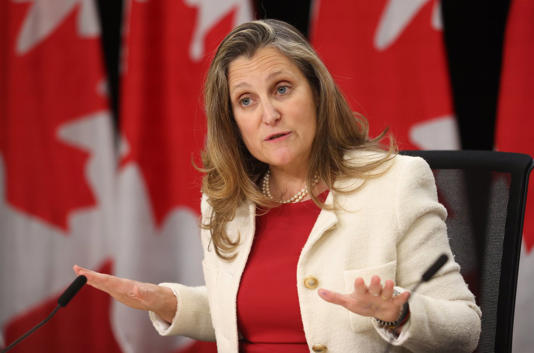
In a dramatic turn of events, the Canadian government unveiled its fall economic update on Monday, revealing a staggering $61.9 billion deficit for the last fiscal year. The announcement was overshadowed by the abrupt resignation of Finance Minister Chrystia Freeland, who stepped down just hours before she was scheduled to present the update.

Freeland's resignation letter, posted on social media, cited irreconcilable differences with Prime Minister Justin Trudeau over the country's economic direction. She criticized the government's "costly political gimmicks" and urged Trudeau to work collaboratively with provincial leaders to address the looming threat of tariffs from U.S. President-elect Donald Trump.

The economic update, tabled by Government House Leader Karina Gould, includes over $20 billion in new spending and a $1.3 billion border security package aimed at countering Trump's tariff threats. The document also highlights the government's GST holiday, which took effect on Saturday and is expected to cost $1.6 billion.

Freeland's departure has sparked calls for Trudeau's resignation and raised questions about the future of Canada's economic policy. Public Safety Minister Dominic LeBlanc has been sworn in as the new finance minister, tasked with navigating the country through these turbulent times.


Comments