Featured

Economy & Policy

Ottawa's Parliament Hill, where the Carney government is rolling out Canada's largest fiscal stimulus package since 1980. / Photo: Unsplash. MoneySavings.ca  ·  Economy & Policy Monday, April 13, 2026  ·  Daily Edition Canada at a crossroads: oil shock, frozen rates, and a trade deal on the clock Canada's economy is navigating a uniquely complicated moment in 2026. A Middle East conflict has sent oil prices surging past US$104 a barrel, a once-in-a-generation fiscal stimulus package is being rolled out in Ottawa, and the clock is ticking on a renegotiation of Canada's most important trade agreement. For everyday Canadians, this means uncertainty at the gas pump, a central bank with limited room to cut rates, and a federal government betting big on public spending to kick-start growth. Here is what you need to know about the forces shaping the Canadian economy right now. 1. The Bank of Canada is stuck — and oil is why The Bank of Canada has held it...

article

TSX set to end the year on a positive note amid global recovery hopes

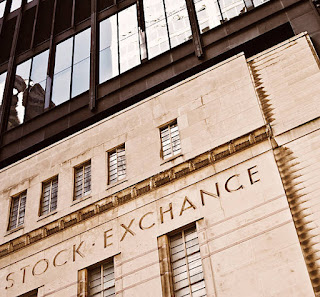
The Toronto Stock Exchange (TSX) is expected to open higher on Friday, the last trading day of 2023, as investors remain optimistic about the global economic recovery from the pandemic.

The TSX closed at a record high of 23,456.78 on Thursday, boosted by gains in energy, financials, and materials sectors. The index has risen more than 20% this year, outperforming its U.S. peers, as Canada’s economy rebounded from the COVID-19 crisis.

The positive sentiment was also supported by the latest data showing that Canada’s GDP grew by 0.4% in October, beating expectations of a 0.2% increase. The growth was driven by the services sector, which expanded by 0.6%, while the goods-producing sector contracted by 0.1%.

On Friday, the TSX futures were up 0.3% at 7:30 a.m. ET, indicating a higher open for the cash market. The Canadian dollar was trading at 79.32 U.S. cents, slightly lower than Thursday’s close of 79.36 U.S. cents.

Meanwhile, the U.S. stock futures were also pointing to a higher open, as Wall Street looked to end the year with record highs. The Dow Jones Industrial Average, the S&P 500, and the Nasdaq Composite have gained 18.7%, 26.9%, and 21.4% respectively this year, as the U.S. economy recovered from the pandemic-induced recession.

The U.S. markets will close early at 1 p.m. ET on Friday, while the TSX will close at its regular time of 4 p.m. ET. Both markets will be closed on Monday, January 1, 2024, for the New Year’s Day holiday.

Comments