Featured

Oil Just Hit $110 — Could Canada's Energy Boom Offset the Tariff Pain?

  Published September 13, 2026 · 6 min read Brent crude touched nearly $110 US a barrel when trading opened Friday morning — its highest level since the spring — as renewed Iran-linked strikes on Saudi energy infrastructure rattled global supply. It settled back down to close the week around $104.61, but the direction of travel has been unmistakable: oil is up roughly 9-10% in the past week alone. That's bad news at the pump. But according to a CBC News analysis published this morning, it might not be bad news for Canada's economy overall. The argument: the roughly 0.5% hit to GDP from Trump's tariffs could be more than offset by the windfall Canada earns as one of the world's biggest oil exporters. For a personal finance reader, that's really two separate stories — one that costs you money, and one that might be quietly making some of your money back. Here's how to think about both sides of your own ledger. Why oil is spiking again The latest leg up traces to ...

article

Chinese Stocks Slump as Economic Woes Outweigh Support Measures


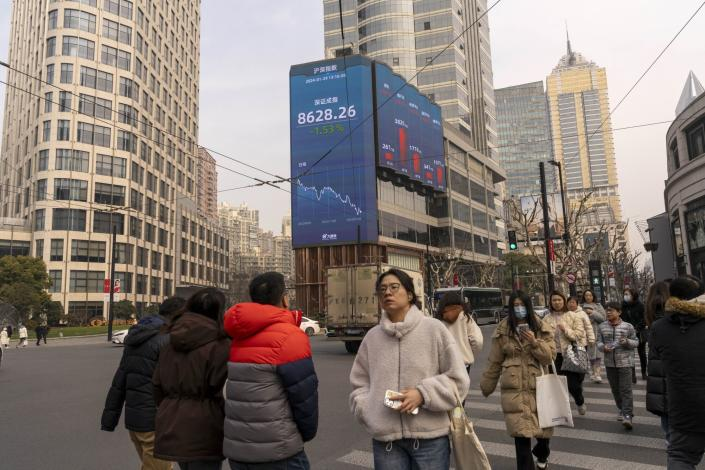
The Chinese stock market suffered another blow on Wednesday, as a key index erased all the gains it had made since late January, when authorities pledged more forceful measures to support the market. The CSI 300 Index of mainland shares fell as much as 1.3%, reflecting weak demand and a faltering recovery in the world’s second-largest economy.

The market sentiment was further dampened by a report that showed China’s factory activity contracted for a fourth month in January, adding to the concerns over the impact of the property crisis and the Covid-19 pandemic. The official purchasing managers index, or PMI, rose slightly to 49.2 in January from 49.0 the month before, but remained below the 50-mark that separates expansion from contraction.

Investors were also disappointed by the lack of further details about the stabilization fund that was expected to inject 2 trillion yuan ($278 billion) into the market, as well as the effect of the central bank’s decision to cut banks’ reserve requirement ratio. Some analysts said that the government’s support measures were not enough to address the structural issues and the growth challenges facing the Chinese economy.

“Any minor rally driven by piecemeal news of government support is likely to be met by more selling,” said Vey-Sern Ling, managing director at Union Bancaire Privee in Singapore. "It’s not clear whether China’s structural issues can be resolved and how determined the leadership is in prioritizing growth."

The Chinese stock market has lost more than $6 trillion in market value since a peak reached in 2021, making it one of the worst performers in the world. The selloff has also affected other markets, such as Hong Kong, where the Hang Seng Index dropped 1.5% on Wednesday, and the U.S., where tech giants slid in late trading after earnings reports.

Comments