On Thursday, a horrifying scene unfolded in Gaza City as Israeli troops fired upon a large crowd of Palestinians desperately waiting for aid. Witnesses recounted the chaos as people raced to pull food off an aid convoy, only to face a barrage of bullets. The result:
more than 100 lives lost. This incident adds to the grim toll of the ongoing Israel-Hamas war, which has now claimed over
30,000 lives according to health officials.
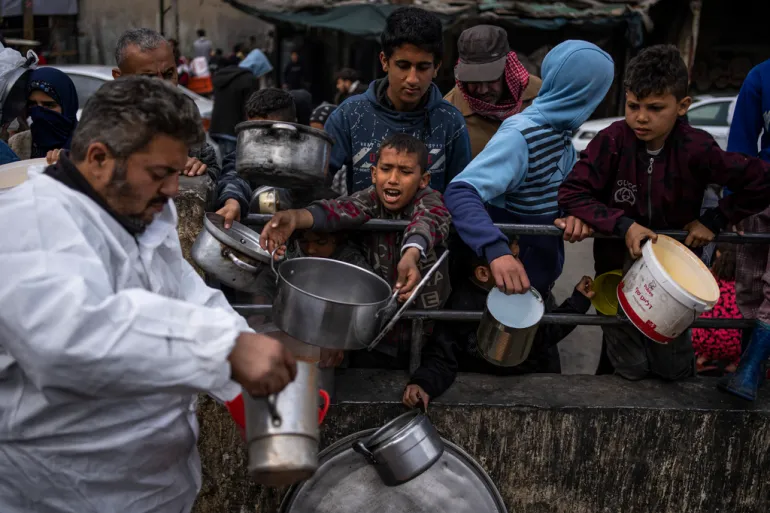
The aid convoy, carrying essential supplies, was a beacon of hope for the hungry and desperate residents of Gaza. For weeks, the area had suffered widespread devastation due to Israel’s relentless air, sea, and ground offensive. Isolation and scarcity had become the norm, making the arrival of food trucks a critical lifeline.
But hope turned to horror when Israeli troops opened fire. Witnesses described the chaos: people scrambling to grab flour and canned goods, only to be met with bullets. Kamel Abu Nahel, being treated for a gunshot wound, shared his harrowing experience. “We’ve been eating animal feed for two months,” he said. “Israeli troops opened fire on the crowd, causing it to scatter. After the shooting stopped, they went back to the trucks, and the soldiers opened fire again.”
Medics arriving at the scene found scores of injured and dead. Some were brought to hospitals in donkey carts due to the overwhelming number of casualties. The Health Ministry called it a “massacre.” Around 104 people were killed, and approximately 760 were wounded.
Gaza’s humanitarian crisis has reached a breaking point. Aid groups struggle to deliver assistance due to the difficulty of coordinating with the Israeli military, ongoing hostilities, and the breakdown of public order. Nearly a quarter of Gaza’s 2.3 million Palestinians face starvation, and around 80% have fled their homes. Women and children make up the majority of those killed.
The conflict’s toll extends beyond the immediate casualties. Overwhelmed hospitals, disrupted infrastructure, and shattered lives paint a bleak picture. The Health Ministry’s figures, which do not differentiate between civilians and combatants, reveal the true extent of the tragedy.
As the world grapples with this heart-wrenching event, questions arise about accountability. The Israeli military declined to provide an on-the-record statement about the role of troops in the incident. Meanwhile, international efforts to broker a cease-fire and secure the release of hostages continue.
The tragedy in Gaza serves as a stark reminder of the urgent need for peace and humanitarian intervention. As the death toll climbs, the world must not turn a blind eye to the suffering endured by innocent civilians caught in the crossfire.



Comments
Post a Comment