Featured

Five Key Tax Changes Coming in 2026: What Canadians Need to Know

  As 2026 approaches, Canadians can expect several important updates to the federal tax system. These changes affect retirement planning, income tax brackets, and a range of credits that influence how much individuals and families will owe—or save—when filing their returns. Here’s a quick look at five of the most notable adjustments. 1. Higher RRSP Contribution Limits Canadians will be able to contribute more to their Registered Retirement Savings Plans (RRSPs) in 2026, thanks to inflation indexing. The increased limit gives savers more room to reduce taxable income while building long‑term retirement security. 2. Updated Federal Tax Brackets Income tax brackets will shift upward to reflect inflation. This means more of your income will be taxed at lower rates, helping offset rising living costs and preventing “bracket creep,” where inflation pushes taxpayers into higher tax brackets without real income gains. 3. Increased Basic Personal Amount (BPA) The Basic Personal Amoun...

article

Rising Tensions: Greece and Turkey’s Fighter Jet Face-Off


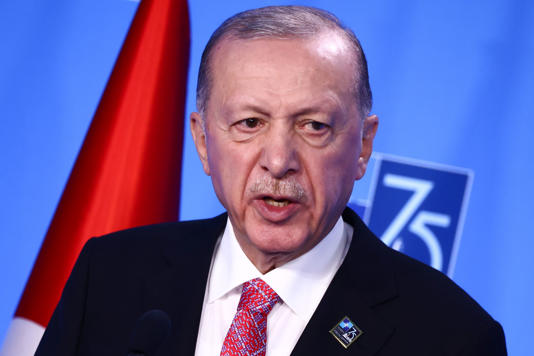
The longstanding rivalry between Greece and Turkey has escalated once again, this time fueled by the acquisition of new fighter jets by both nations. The recent developments have sparked concerns over potential military confrontations and the stability of the region.

Background

The tension between Greece and Turkey is not new. Both countries have a history of disputes over territorial waters, airspace, and the status of Cyprus. However, the latest escalation is attributed to Greece’s recent acquisition of advanced fighter jets, including the F-35s, which has been perceived by Turkey as a significant threat.

Recent Developments

In response to Greece’s military upgrade, Turkey has also moved to bolster its air force capabilities. The Biden administration recently unfroze a substantial deal to provide Turkey with 40 new F-16 fighters and modernize an additional 79 aircraft. This move is seen as a strategic balance to Greece’s new F-35s and has further intensified the arms race between the two NATO allies.

Diplomatic Reactions

The international community, particularly NATO, has expressed concern over the rising tensions. NATO officials have urged both countries to resolve their differences through diplomatic means and maintain regional stability. Despite these calls for peace, both Greece and Turkey continue to accuse each other of airspace violations and provocative actions.

Potential Implications

The ongoing military buildup and mutual distrust between Greece and Turkey could have broader implications for NATO and regional security. Experts warn that any miscalculation or accidental engagement could lead to a larger conflict, disrupting the unity and operational effectiveness of NATO.

As both nations continue to enhance their military capabilities, the international community watches closely, hoping for a peaceful resolution to avoid further escalation.


Comments