Featured

Wall St Futures Slip as Geopolitical Uncertainty and Mixed Earnings Weigh on Sentiment

Wall Street futures slipped early Thursday as investors grew cautious in the absence of clear signals on the U.S.–Iran war, while a wave of mixed earnings added to the uncertainty. Iran’s seizure of two ships in the Strait of Hormuz and its demand that the U.S. lift its naval blockade have heightened geopolitical tensions, even after President Donald Trump extended the ceasefire indefinitely. The standoff continues to keep oil prices above $100 per barrel , raising concerns about a potential inflation flare‑up.  Economists warn that even if the conflict eases, the global economy may take time to normalize after one of the largest oil supply disruptions in decades.  As of early morning trading, Dow E‑minis were down 0.73%, S&P 500 E‑minis slipped 0.50%, and Nasdaq 100 E‑minis fell 0.48% , reflecting a broader pullback in risk appetite.  Earnings added another layer of volatility. Tesla shares fell after the company boosted its annual spending plan to more than $25...

article

Gaza Ceasefire Plan: A High-Stakes Gamble for Survival


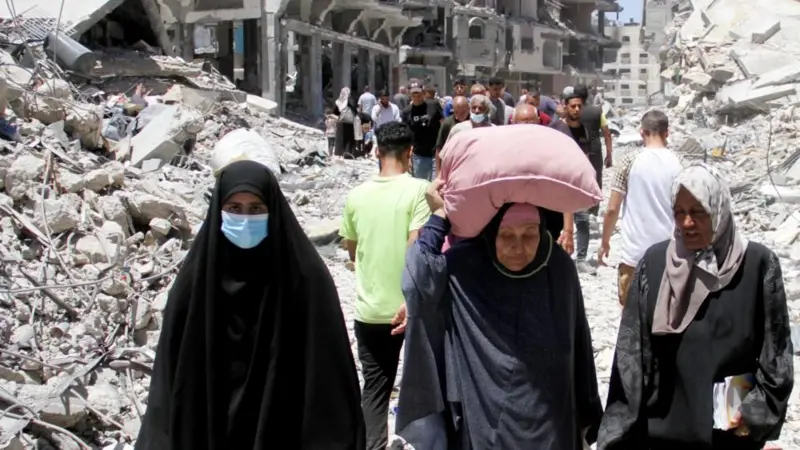
For the leaders of both Hamas and Israel, ending the war in Gaza has become a deadly game of survival. The terms on which the war finally ends could largely determine their political future and their grip on power. Let’s delve into the complexities of this high-stakes situation.

The Stakes

Hamas Leader Yahya Sinwar’s Dilemma

Hamas leader Yahya Sinwar faces a precarious situation. His physical survival is at risk, and this vulnerability has hindered previous negotiations. The question of how to permanently end the fighting has been deferred until the last stages of the plan outlined by US President Joe Biden. Sinwar knows that any misstep could cost him dearly.

Israel’s Prime Minister Benjamin Netanyahu’s Calculated Approach

Netanyahu, too, treads carefully. Phase one of the plan involves the release of hostages—both living and dead. While this move would be welcomed by many, Netanyahu must ensure that Hamas won’t restart the war once the hostages are home. His coalition partners demand a tough stance against Hamas, but he also faces a corruption trial and the prospect of early elections.

The Chasm and the Way Forward

Permanent Ceasefire Guarantees vs. Keeping Options Open

Hamas leaders seek permanent ceasefire guarantees upfront. Previous deals collapsed due to this chasm. Netanyahu, however, wants to keep his long-term options open. Bridging this gap depends on his maneuvering room with hard-right government allies and Hamas leaders’ willingness to consider alternatives to Hamas’s “elimination.”

The Missing Leaders

While Hamas has suffered military losses, its top leaders—Yahya Sinwar and Mohammed Deif—remain unscathed. Their fate remains critical. If Israel leaves them free in Gaza, it could spell political disaster for Netanyahu.

In this deadly game of survival, both sides weigh their moves carefully. The world watches as they navigate treacherous waters, hoping for a lasting resolution that doesn’t come at the cost of more lives.


Comments