Featured

Gas Prices Are Finally Falling in Canada — Here's How Much You're Saving and What Comes Next

After weeks of painful price spikes driven by the U.S.-Iran conflict, Canadians are finally catching a break at the pump. The national average gas price dropped to 169.1 cents per litre on Monday, April 20 — down from a peak near 198 cents — as two things happened at once: Iran reopened the Strait of Hormuz to commercial traffic, and Prime Minister Mark Carney's federal fuel excise tax suspension came into effect. National Average 169.1¢/L ▼ Down from ~198¢/L peak Gas savings (excise tax) 10¢/L off gasoline until Sept. 7 Diesel savings 4¢/L off diesel until Sept. 7 WTI Crude (current) ~$87 ▼ Down from $120 peak What just happened — and why Since the U.S.-Iran conflict began in late February, Brent crude surged more than 55%, briefly topping $120 a barrel — the largest oil supply shock in the history of global markets, according to the Interna...

article

Tensions Escalate as Strike on Israeli Golan Heights Kills 11


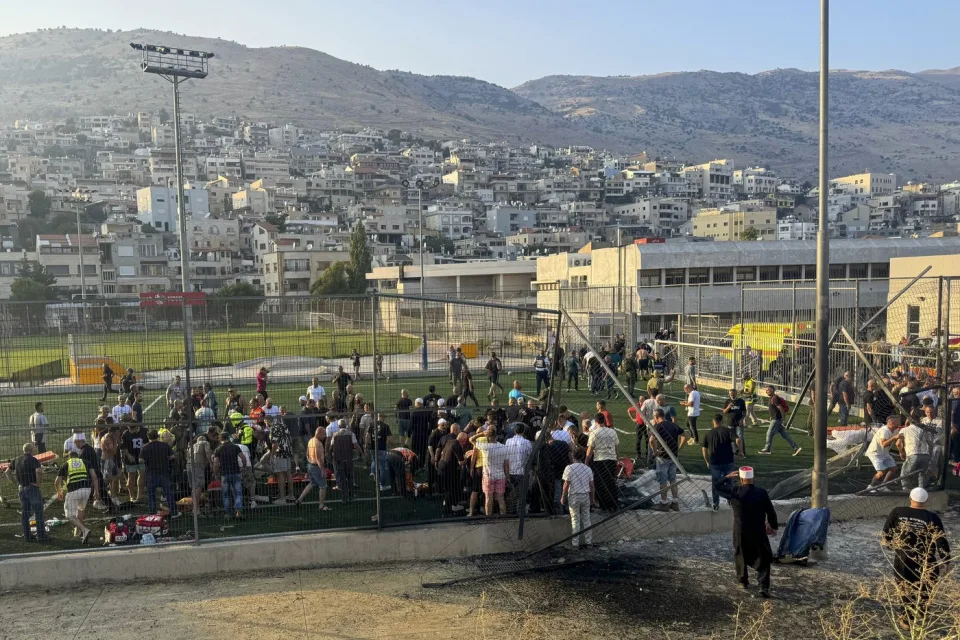
A deadly rocket strike on the Israeli-controlled Golan Heights has claimed the lives of 11 children and teenagers, raising fears of a broader regional conflict. The attack, which occurred on a soccer field in the Druze town of Majdal Shams, marks the deadliest strike on an Israeli target along the northern border since the recent escalation of hostilities between Israel and Hezbollah.

Israeli authorities have blamed the Lebanese militant group Hezbollah for the attack, but Hezbollah has vehemently denied any involvement. Rear Adm. Daniel Hagari, the chief spokesman for the Israeli military, described the incident as a “very serious” event and vowed that Israel would respond accordingly.

Hezbollah’s chief spokesman, Mohammed Afif, stated that the group “categorically denies carrying out an attack on Majdal Shams.” This denial is unusual for Hezbollah, which has claimed responsibility for multiple attacks on Israeli military posts in recent days.

The strike follows a series of cross-border skirmishes, including Israeli airstrikes on Hezbollah positions in southern Lebanon and retaliatory attacks by Hezbollah. The escalating violence has prompted Israeli Prime Minister Benjamin Netanyahu to cut short his visit to the United States.

Lebanon’s government has called for an immediate cessation of hostilities and condemned all attacks on civilians. As tensions continue to rise, the international community watches with concern, fearing that the conflict could spiral into a wider regional war.


Comments