Featured

Colombia on Edge as Trump’s Post‑Venezuela Threats Stir Regional Anxiety

Colombian military patrol the Simón Bolívar International Bridge in Cúcuta on Tuesday. After the U.S. seized Venezuelan President Nicolás Maduro, members of powerful armed groups started arriving in Colombia from neighbouring Venezuela. Tensions in Colombia have intensified following President Donald Trump’s forceful remarks in the wake of the U.S. military operation that captured Venezuelan leader Nicolás Maduro. The comments have revived long‑standing fears about regional instability and raised questions about the future of U.S.–Colombia relations. Rising Tensions After the Venezuela Strike In the aftermath of the Venezuela attack, Trump issued sharp warnings toward Colombia, accusing President Gustavo Petro of enabling drug production and trafficking. He suggested that Petro’s government “would not be doing it for long,” a statement widely interpreted as a threat of potential intervention. The remarks came amid a broader pattern of aggressive rhetoric toward several countries, s...

article

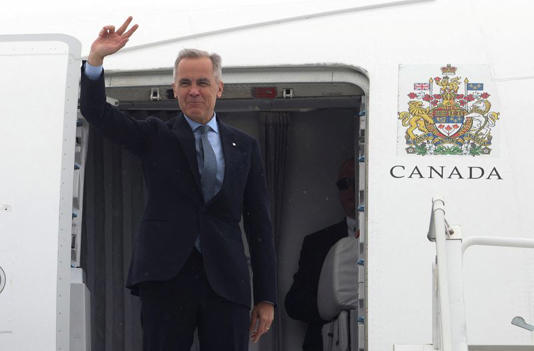
High-Stakes Diplomacy: Carney and Trump Meet Amid Trade Tensions

Canadian Prime Minister Mark Carney is set to meet U.S. President Donald Trump at the White House today, marking a pivotal moment in Canada-U.S. relations. The meeting comes as Carney seeks to navigate a complex diplomatic landscape, with trade tariffs and security concerns at the forefront of discussions.

Carney, who recently won a minority Liberal government, has emphasized that while the meeting is crucial, no immediate agreements should be expected. "We do not expect white smoke out of that meeting," he stated, signaling that negotiations will be a long and intricate process.

Trump, known for his hardline stance on trade, has imposed tariffs on Canadian industries, including steel, aluminum, and automobiles. His recent proposal of a 100% tariff on foreign film production has further strained relations, raising concerns among Canadian business leaders. Additionally, Trump's repeated suggestions that Canada should become part of the U.S. have fueled tensions, prompting Carney to firmly reject any threats to Canadian sovereignty.

Diplomatic and business leaders have warned that the outcome of this meeting could have lasting consequences. British Columbia Premier David Eby urged Carney to stand firm, emphasizing the importance of protecting Canada's economic interests. Meanwhile, trade experts suggest that a rushed deal could be detrimental to Canada, advocating for a strategic approach to negotiations.

As Carney and Trump engage in discussions, the world watches closely, anticipating the next chapter in the evolving Canada-U.S. relationship. Whether this meeting will pave the way for a new trade-security framework or deepen existing tensions remains to be seen.

Comments