Featured

Shopify Just Pushed the TSX to a Record — Should You Be Buying, or Is It Too Late?

  Published August 6, 2026 If you glanced at the markets on Wednesday and saw the TSX hit another record high, there's a good chance one company did most of the heavy lifting: Shopify. The S&P/TSX Composite closed up 344.83 points, or 1%, at 36,146.42 on August 5 — its second straight record close. Shopify shares jumped 16.5%, their biggest one-day move in a year, after the Ottawa-based e-commerce company beat earnings expectations and issued a stronger-than-expected outlook for the rest of the year. Gold miners added to the rally too, as bullion prices climbed. What It Means for You: If you own a Canadian equity index fund or ETF in your RRSP or TFSA, you almost certainly own a slice of this move already — whether you meant to or not. What actually happened Shopify reported second-quarter revenue of $3.58 billion (U.S.), up 34% from a year earlier and well ahead of the roughly $3.45 billion analysts expected. Adjusted earnings came in at $0.42 a share versus the $0.40 expecte...

article

The History of Leap Years


The concept of leap years has a fascinating history that dates back thousands of years. Let’s explore how they came about:

  1. Ancient Calendars and Extra Time:

    • During the Bronze Age (around 3300-1200 BC), various civilizations used calendars that added extra periods of time based on the year.
    • These early calendars recognized that the true duration of a year is approximately 365.25 days, not the commonly recognized 365 days.
  2. Julius Caesar and the Julian Calendar:

    • In 45 B.C., Julius Caesar, the Ancient Roman emperor, introduced the Julian calendar.
    • The Julian calendar consisted of 365 days divided into the 12 months we still use in the modern Gregorian calendar.
  3. Leap Years Take Shape:

    • The leap year as we know it today began to take form under Julius Caesar’s rule.
    • To account for the discrepancy between the calendar year and the solar (tropical) year (the time Earth takes to orbit the Sun once), an extra day was added every four years.
  4. The “Leap” in Leap Years:

    • The name “leap” comes from the fact that, starting from March onward, each date of a leap year moves forward by an extra day compared to the previous year.
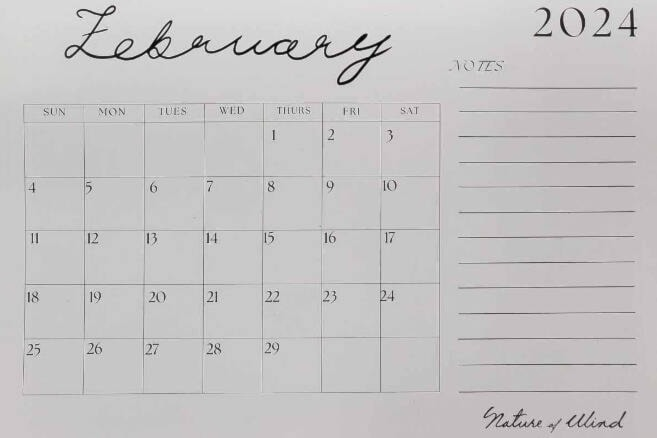
    • For example, March 1, 2023, was a Wednesday, but in 2024, it falls on a Friday. Normally, the same date only moves forward by a single day between consecutive years.
  5. Beyond the Gregorian Calendar:

    • While the Gregorian calendar is the most widely used, other calendars also have versions of leap years.
    • The Hebrew, Islamic, Chinese, and Ethiopian calendars incorporate leap years, but their patterns differ from the Gregorian system.
  6. Leap Seconds and the Future:

    • In addition to leap years, the Gregorian calendar occasionally includes leap seconds (most recently in 2012, 2015, and 2016).
    • However, the International Bureau of Weights and Measures (IBWM) plans to abolish leap seconds from 2035 onward.
  7. Why We Need Leap Years:

    • A calendar year is exactly 365 days long, while a solar year is roughly 365.24 days (365 days, 5 hours, 48 minutes, and 56 seconds).
    • Without leap years, the gap between the start of a calendar year and a solar year would widen over time, affecting the timing of seasons.
    • For instance, if we stopped using leap years, the Northern Hemisphere’s summer would eventually begin in December instead of June.

In summary, leap years play a crucial role in keeping our calendars aligned with astronomical cycles. So, when you enjoy that extra day in February, remember the ancient origins and the intricate dance between Earth and the Sun! 


Comments